
Bent County Criminal Court Records
A Bent County criminal court record is kept by the court after a criminal case is opened. The record can include the complaint or information, charges, advisement entries, bond orders, arraignment minutes, motions, hearing settings, plea entries, verdict entries, disposition and sentence orders, probation terms, and the register of action. For Bent County, court-file access runs through the Colorado Judicial Branch and the Bent Combined Court clerk, not through a county-built case-document database.
Criminal jurisdiction is split by case type. Bent County Court handles misdemeanors, traffic infractions, criminal traffic matters, protection orders, and felony complaints or advisements that may later move to district court. Bent County District Court, part of the 16th Judicial District with Otero and Crowley counties, handles felony criminal cases after filing or bindover. Both court levels use the same local courthouse access point in Las Animas.
The filed criminal case is different from a jail booking. Jail custody, bond payment, and current inmate status belong with the sheriff and jail. The full court file, including disposition and sentence, belongs with the court clerk. For the narrower arrest-to-charge path, the Bent County arrest records and charges page separates sheriff records from prosecutor-filed charges.
The Colorado sex offender registry search is one statewide source tied to some criminal outcomes. It is not the Bent County criminal court file, but it can be relevant when a case disposition creates registration duties.
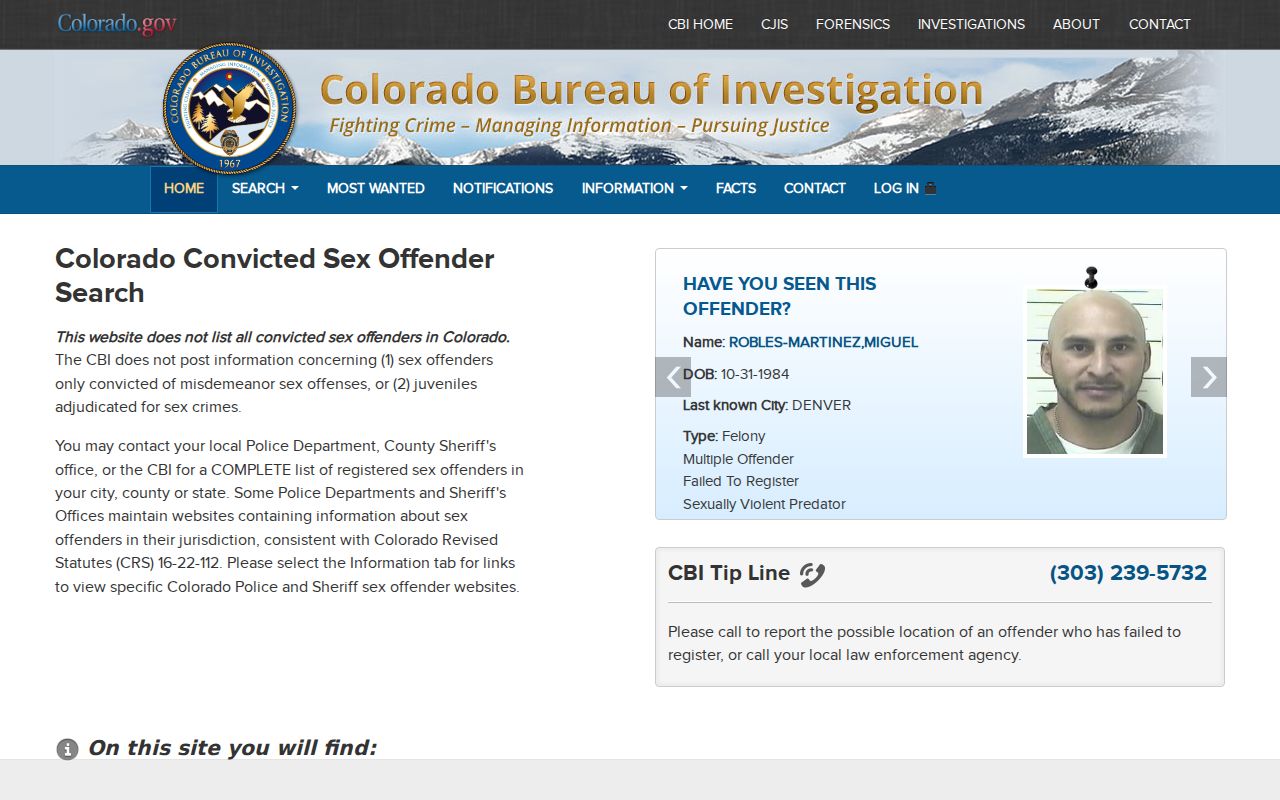
Registry results should be treated as a separate state record source, while the court complaint, plea, and sentence order still come from the court record.
Search Bent County Criminal Records
The official starting point for public schedule and case-status checks is the Colorado Judicial Branch docket search. Select Bent County, then use Bent Combined Court when the search needs to stay local. The docket tool can help identify hearing dates, case class, court type, party names, and case numbers. It does not replace the Colorado Judicial record/document request form when a copy of the complaint, disposition, sentence order, or register of action is needed.
- Open the Colorado Judicial Branch docket search and choose Bent County from the county filter.
- Select Bent Combined Court if the search should be limited to the local court location.
- Choose District for felony criminal cases, County for misdemeanors and felony advisements, or Both when the level is not known.
- Add a party name, attorney name, or case number. The portal states that a date alone is not enough.
- Use the case class to read the file type. CR points to district criminal, while M and T may appear in county misdemeanor or traffic/criminal traffic contexts.
- Submit a record request to the clerk when the docket is not enough and a document copy is required.
Requests for copies are routed to the court location after submission. The record request form gives a three-business-day response expectation unless extenuating circumstances exist. The clerk may restrict access under statutes, court rules, Supreme Court rules, Chief Justice Directives, local orders, or other legal authority. Suppressed cases, juvenile cases, probate matters, and records with protected information may require government photo ID or may not be released to a public requester.
The Colorado Internet Criminal History Check is useful when the need is statewide Colorado criminal history, not a single Bent County court file. The CBI records and background checks page explains that ICHC is a name-based Colorado criminal-history product with exclusions. It does not provide full court pleadings, motions, sentence orders, jail status, or every local clerk document.
CBI's official criminal-history source is another record channel for Bent County criminal court records research.
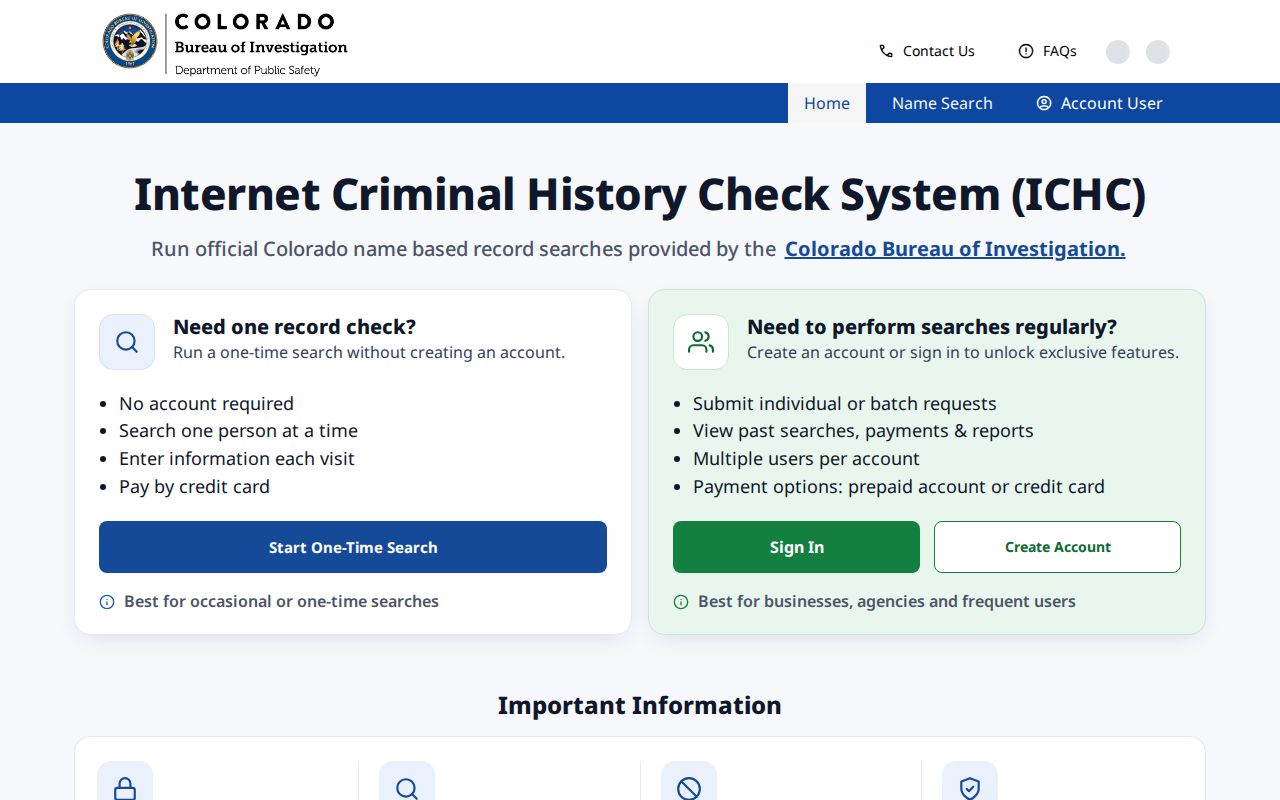
A CBI result may point to criminal history, but certified court documents still require the court record request process.
Bent County Criminal Case Flow
Once charges are filed, the Bent County criminal court record grows in stages. Early entries may show advisement, bond, protection-order terms, and the charging document. Later entries may show arraignment, plea settings, pretrial conferences, motions, trial dates, continuances, disposition, sentence, and probation. The register of action is the short chronological index that helps a reader see how the case moved.
Case flow: Charges Filed › Advisement or Arraignment › Pretrial and Motions › Plea or Trial › Disposition › Sentencing.
| Stage | What the Bent County record may show |
|---|---|
| Charges filed | Complaint or information, charge counts, case class, prosecutor filing, and defendant information. |
| Advisement or arraignment | Rights, bond, protection-order terms, plea timing, and future hearing dates. |
| Pretrial and motions | Attorney appearance, continuances, motions, orders, negotiations, and trial settings. |
| Plea or trial | Guilty plea, not-guilty plea, verdict, dismissal, deferred entry, or amended count. |
| Disposition and sentencing | Outcome, sentence order, probation, fines, costs, jail, prison, restitution, or other conditions. |
What Bent County Criminal Records Show
The content in a Bent County criminal court record depends on the case level and stage. A new misdemeanor file may show only the complaint, advisement, bond, and next setting. A felony case may show county-court advisement entries before the district-court file reflects arraignment, motions, plea, trial, disposition, and sentence. The Judicial Branch request form specifically names Complaint/Information, Disposition/Sentence Order, Protection Order, Ticket, and ROA for criminal matters.
| Field or document | What it shows |
|---|---|
| Case number | Year, case class, and sequence, such as CR for district criminal or M for county misdemeanor. |
| Court and location | Bent Combined Court, court type, and any division shown in the docket. |
| Parties | The People of Colorado and the defendant, plus attorneys when listed. |
| Complaint or information | The formal charging document that identifies the alleged offense counts. |
| Bond and advisement | Release conditions, appearance duties, and early court warnings or orders. |
| Register of action | A chronological case summary with hearing, charge, sentence, and minute-order entries. |
| Disposition or sentence order | The outcome and sentence terms after plea, verdict, dismissal, or other resolution. |
| Restrictions | Sealed, juvenile, suppressed, confidential, or redacted material that may not be public. |
The Colorado Department of Corrections offender search is useful only after sentencing results in state prison, parole, or another DOC-tracked status. Bent County jail custody remains a separate county jail matter, and docket entries are separate from DOC custody records.
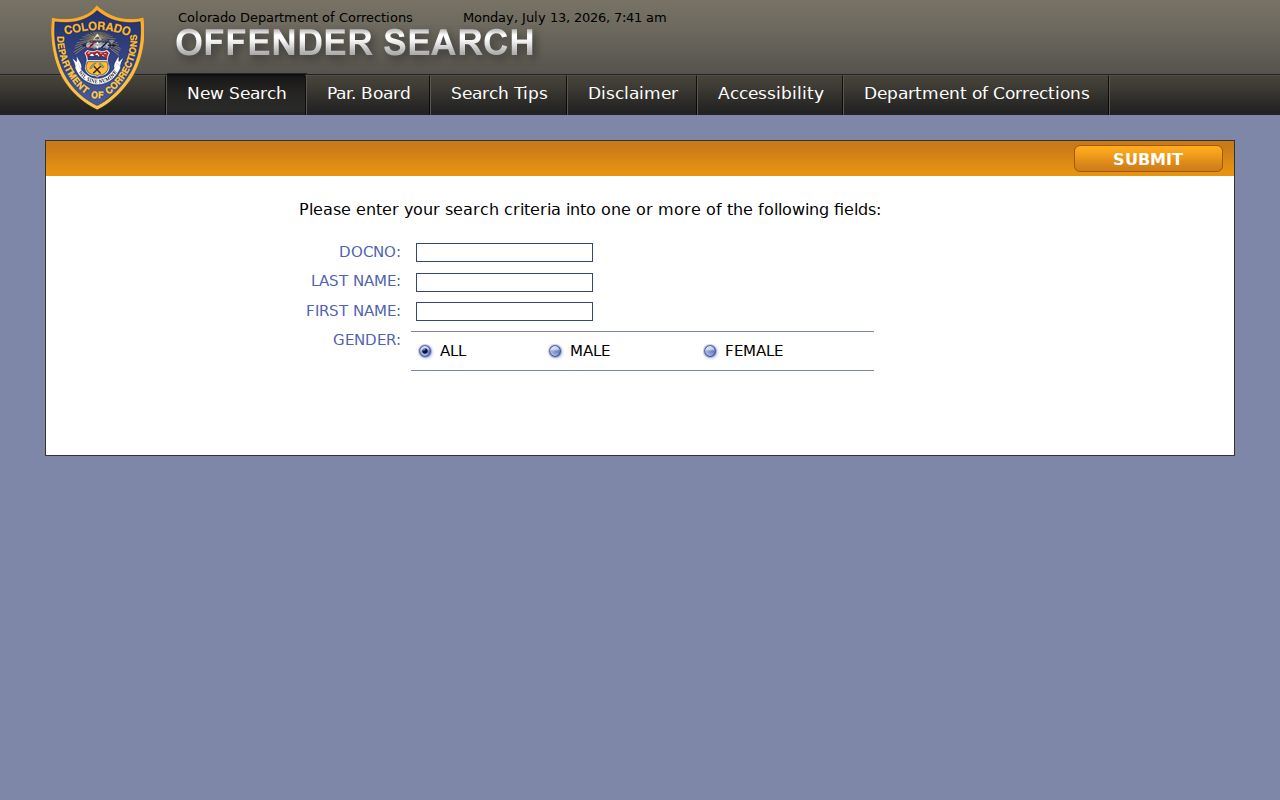
DOC search results can help confirm state custody after a Bent County sentence, but they do not replace the criminal court sentence order.
Bent County Charges vs Convictions
A filed charge is an accusation. A conviction is an outcome. Bent County criminal court records may show charges that were dismissed, reduced, amended, deferred, or resolved by plea. A name appearing in a docket or charge list does not prove guilt. The disposition and sentence fields matter because they show what the court finally did with each count.
| Point | Charge | Conviction |
|---|---|---|
| Meaning | A prosecutor-filed allegation in a complaint or information. | A finding or plea that results in a judgment on a count. |
| Where it appears | Charging document, docket, ROA, and early hearing entries. | Disposition, sentence order, judgment, and criminal-history records when reportable. |
| Can change | Yes. Counts can be amended, reduced, dismissed, or added. | Yes, but changes usually require later court action, appeal, or sealing. |
| How to confirm | Read the current docket and complaint or information. | Request the disposition or sentence order from the clerk. |
For prosecution context, the Governor's Office announcement about the 16th Judicial District Attorney appointment confirms that Bent, Crowley, and Otero counties share the district prosecution structure.
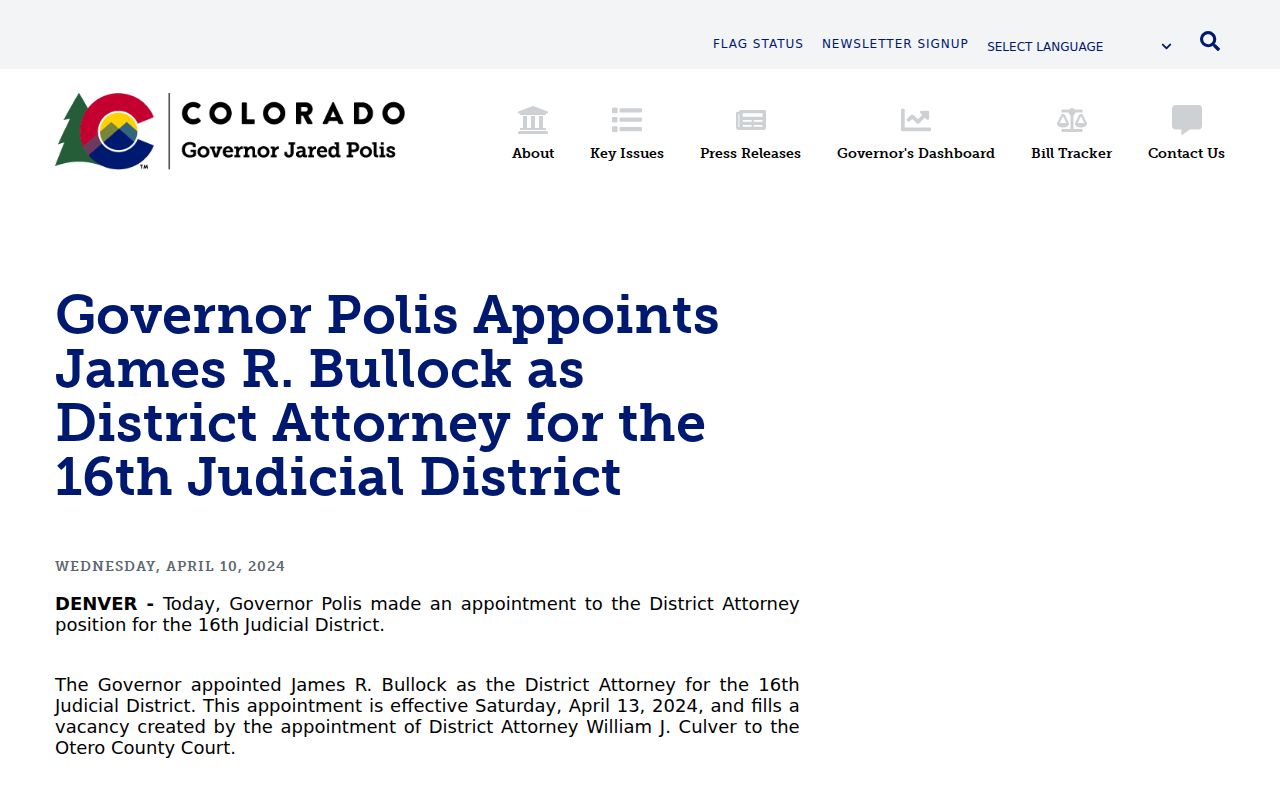
The prosecutor's charging role explains why the court charge record is not the same file as a sheriff booking report.
Bent County Sealed Criminal Records
Colorado sealing is not the same as asking the clerk for a copy. The person seeking relief must identify the case, check eligibility, obtain a current criminal history if required, file in the court where the record is located, notify the district attorney when required, and pay any processing fee unless waived. For a Bent County case, the local filing point is Bent Combined Court when the case was filed there.
| Point | Sealed | Expunged |
|---|---|---|
| Public access | Hidden from ordinary public view by statute or court order. | Removed or treated as unavailable in the narrow contexts where expungement applies. |
| Common Colorado use | Adult conviction and non-conviction sealing are the main researched paths. | Often tied to juvenile or specific statutory processes rather than routine adult files. |
| Record custodians | Court, CBI, sheriff, prosecutor, and other custodians may each need the order. | Custodians follow the specific expungement authority and order. |
| Local caution | A sealed Bent County case may not vanish from every system at once. | Eligibility should not be assumed from a public docket result. |
The Colorado Judicial public-defender materials may be relevant when an open criminal case affects a person's rights and defense needs.
Public-defender appointment or application activity can appear in court entries, but legal advice comes from counsel rather than a records search.
Bent County Criminal Record Access
Colorado uses several rules for access. The Colorado Open Records Act covers many public records, but criminal-justice records held by law-enforcement agencies, prosecutors, and criminal-justice entities are governed by the Colorado Criminal Justice Records Act. Court records are also governed by the Colorado Judicial Branch access guide, Chief Justice Directive 05-01, and the Supreme Court Rule on Public Access to Information and Records. These layers matter in Bent County because the court, sheriff, CBI, and DOC each hold different records.
Key access rules:
C.R.S. 24-72-201 to 206 governs many Colorado public-record requests unless another law limits access.
C.R.S. 24-72-301 to 309 governs criminal-justice records such as sheriff and prosecutor records.
Colorado Judicial Branch public access materials explain court-record access, CJD 05-01, PAIRR, and judicial record request channels.
For Bent County criminal court records, use the court docket and record request process first. Use the sheriff's records request only for incident, arrest, or agency report records that are in sheriff custody. Use CBI for statewide criminal history and DOC for sentenced state custody. Each channel answers a different question.
Bent County Background Check Limits
Background checks are not the same as criminal court records. CBI ICHC is a Colorado-only name-based criminal-history search. It can exclude sealed cases, juvenile arrests, traffic arrests under age 16, and other records not included in the public product. A court copy request can produce a complaint, sentence order, or ROA from a specific case, but it is not a consumer report and should not be used as a substitute for legally compliant screening.
Important: Do not use casual court lookups for employment, housing, credit, insurance, or other FCRA-regulated decisions.
The CBI records page gives state-level background-check context for Bent County names.
CBI is best viewed as a statewide criminal-history channel, while the local clerk remains the source for the specific Bent County case file.
Restricted Bent County Criminal Records
Not every Bent County criminal court record is open in full. Juvenile delinquency records are more restricted than adult criminal cases. Sealed cases, suppressed matters, protected-party details, victim information, minor identifiers, financial account numbers, medical details, and protected addresses may be withheld or redacted. Probate and family matters can also overlap with criminal events and have their own access limits.
If a requested record is restricted, the clerk may ask for government photo ID, proof of party status, a court order, or a narrower request. If the record is a sheriff incident report instead of a court file, the Bent County Sheriff's records request process applies and requires a BCSO case number. If a sentence led to state custody, DOC can confirm offender status, but not the court's full case file.
Note: A docket hit can help identify a Bent County criminal case, but it does not guarantee public access to every document.